





Practical guide
A good power bank for load-shedding is one of the cheapest ways to stay connected when the electricity goes. But buying one is only half the plan: you also need it charged at the right time, and a few phone habits that stretch every percent. This guide puts it all together for Pakistani homes, hostels and offices.
2–3 hrstypical outage covered by 10,000mAh
1 rulerecharge as soon as power returns
20–30%battery saved with simple settings
In this guide
🔋
Keep the power bank topped up, not sitting empty in a drawer.
📶
Mobile data and weak signal drain the battery fastest.
💡
A power bank with a light helps when the room goes dark.
01Pick the right size for your outages
Start with how long your power cuts usually last and how many phones you need to charge. For one phone and outages of two or three hours, a 10,000mAh power bank is usually enough. If several family members share one unit, or you regularly face longer cuts in the evening, a 20,000mAh model gives you more breathing room.
👤
One person, short cuts
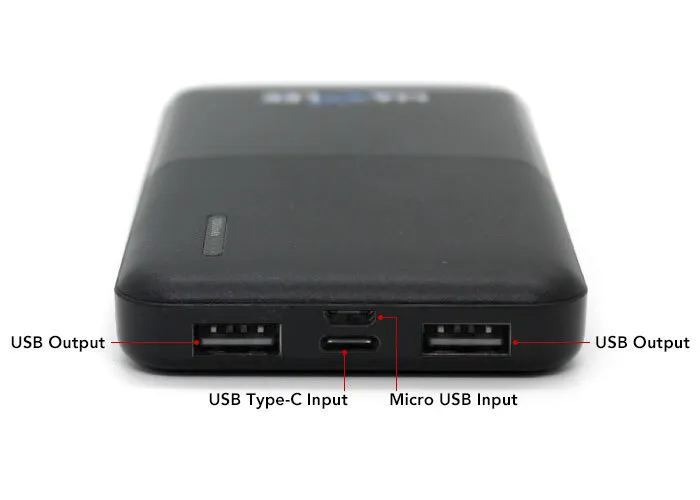
A compact 10,000mAh such as the Links 313 mini has two USB outputs, so you can top up a phone and earbuds together.
10,000mAh👨👩👧
Family, long cuts
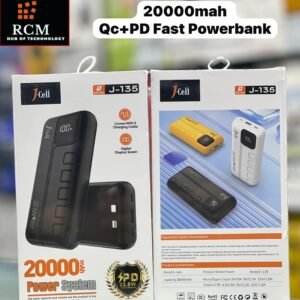
The J-Cell J-135 holds 20,000mAh and has three built-in cables, so everyone can plug in without hunting for wires.
20,000mAh🌙
Dark rooms
The J-Cell J-102 has a night light with four brightness levels as well as fast PD charging.
Light + speedNot sure about sizes? Our guide on how many mAh you need shows the simple maths.
02A power bank for load-shedding needs a charging routine
The biggest mistake people make is letting the power bank sit empty. When the electricity goes off unexpectedly, an empty power bank is no help. Use this routine instead:
Power returnsplug in the power bank first
→
Bank fullunplug and keep it ready
→
Outage startscharge your phone from 30–40%
- Charge the power bank first when the electricity comes back, before you plug in other gadgets. It takes longer to fill than a phone.
- Keep it at least half full at all times if your area has a schedule you can predict.
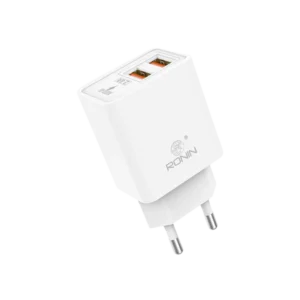
- Use a good wall charger and cable. A weak adapter can make a 10,000mAh power bank take all night. A proper charger like the Ronin Catalyst 20W refills power banks with fast input much faster.
- Top up your phone in the middle, not at 1%. Charging from 30–40% is gentler on the phone battery and you never get caught at zero.
💡
Know your schedule. If your feeder has a published load-shedding schedule, charge everything 30 minutes before the planned cut.
03Make your phone battery last longer during a cut
Your power bank goes further when your phone uses less. These settings typically make a noticeable difference:
- Turn on battery saver as soon as the power goes.
- Lower screen brightness and use dark mode if your phone has an OLED screen.
- Switch off mobile data and Wi-Fi scanning when you do not need them. In weak signal areas, phones work harder to stay connected.
- Close games and video apps running in the background.
- Download songs or classes before the cut instead of streaming them.
Battery saverOn during every outage
BrightnessLower it
Mobile dataOff when not needed
Background appsClose games and video
BluetoothOff unless you use earbuds
LocationOff if not needed
04Power bank safety in Pakistani homes
Heat is the enemy of lithium batteries. During summer, a power bank left in direct sunlight or a closed car can get very hot, which shortens its life and can be dangerous. Keep your power bank in a cool, shaded place, and stop using it if it swells, smells or gets unusually hot.
⚠️
Do not charge on a bed or pillow. Soft surfaces trap heat. Charge your power bank and phone on a hard, flat surface, and avoid covering them with blankets.
When the electricity returns, there can be a short surge. If you can, unplug chargers during long outages and plug them back in a minute after the power is stable. Our accessory care routine has more tips for voltage drops.
05Other load-shedding helpers
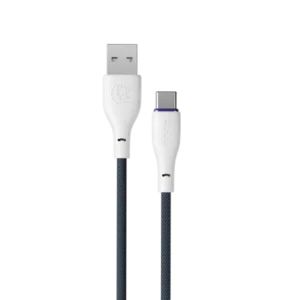
A few accessories make power cuts easier to live with. Wired handsfree use no battery at all, so they are perfect for long calls while you save phone power. Braided cables such as the Ronin R-2025 Type-C cable also survive daily plugging and unplugging better than thin cables.
For background, see the rolling blackout article on Wikipedia.
Key takeaway
The best power bank for load-shedding is the one that is full when the power goes. Buy the right size, recharge it first when the electricity returns, and use battery saver during every cut.
🛒Shop the products in this guide
-
Power Banks
J-Cell J-102 10000mAh Transparent Power Bank (PD 66W, 4-in-1 Cable)
Original price was: ₨ 3,399.₨ 2,799Current price is: ₨ 2,799. Add to cart -
Power Banks
J-Cell J-135 20000mAh Power Bank with Built-in Cables
Original price was: ₨ 4,999.₨ 4,499Current price is: ₨ 4,499. Read more -
Power Banks
Links 313 LK-126 Mini 10000mAh Power Bank
Original price was: ₨ 2,999.₨ 2,199Current price is: ₨ 2,199. Read more -
Chargers & Cables
Ronin Catalyst 20W PD + QC Fast Charger
Original price was: ₨ 2,295.₨ 1,999Current price is: ₨ 1,999. Add to cart -
Chargers & Cables
Ronin Flexin R-2025 Type-C Cable (3A Fast Charging)
Original price was: ₨ 1,135.₨ 795Current price is: ₨ 795. Add to cart
06Frequently asked questions
What size power bank is best for load-shedding?
For one phone and 2–3 hour outages, 10,000mAh is usually enough. For families or long cuts, 20,000mAh is better.
Can I keep my power bank plugged in all the time?
It is better to unplug it once it is full. Most good power banks stop charging when full, but heat from constant charging can shorten battery life.
Can I charge my phone while the power bank is charging?
Some models support pass-through charging, such as the J-Cell J-135. Check the product details before you rely on it.
Why does my power bank take so long to charge?
Large capacities and slow 1A or 2A adapters take many hours. A fast charger helps if your power bank supports fast input.

Mobile Accessories

Neckband vs Earbuds: Which Is Better for You?
Neckbands last longer and are hard to lose; earbuds are compact and stylish. Here is how they compare for commuters, riders, students and gym users.
Device Care & Maintenance
Why Is My Phone Charging Slowly? 10 Causes and Simple Fixes
From lint in the port to the wrong charger, here are the most common reasons a phone charges slowly and how to fix each one in minutes.

Device Care & Maintenance
One Earbud Not Working? How to Fix Left or Right Earbud Problems
Only the left or right earbud playing? Most cases are fixed in minutes with these steps, from cleaning the charging contacts to a full reset.